Introduction
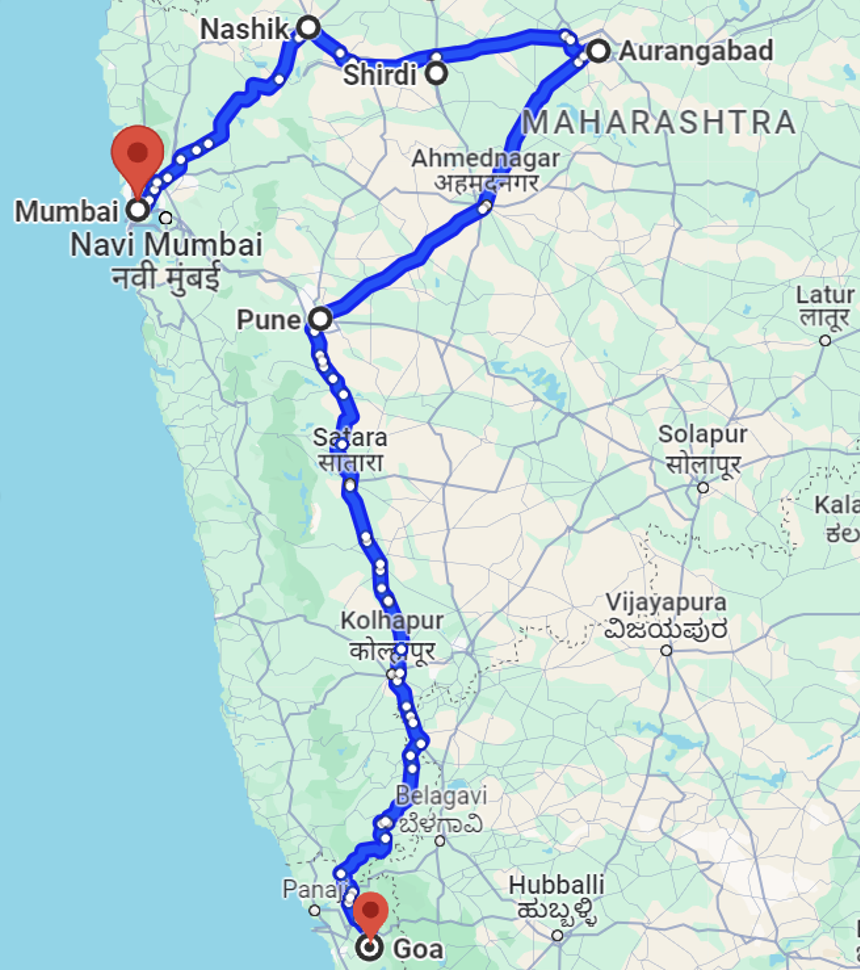
| Accommodation | Destination | Start | End | Room Type | Duration |
| Sun and Sand | Mumbai | 2 Jan | 5 Jan | Deluxe Room | 3 Nights |
| Gateway hotel | Nashik | 5 Jan | 6 Jan | Superior room | 1 Night |
| Vivanta By Taj Aurangabad | Aurangabad | 6 Jan | 9 Jan | Superior Room | 3 Nights |
| Aurora Towers | Pune | 9 Jan | 12 Jan | Executive room | 3 Nights |
| Panjim Inn | Panjim | 12 Jan | 14 Jan | Superior Room | 2 Nights |
Itinerary
Flight VS 354
Depart Heathrow at 1715 1st January Arrives Mumbai 0750 Hrs 2nd January
Day 1: Arrive Mumbai (Thurs, 2 January)
On arrival in Mumbai: Having cleared immigration, collected your luggage and passed through customs, please make your way towards the exit of the terminal building where you will see a bank of people waiting for you. Amongst them will be Travel Counsellors Representative who will be waiting to greet you with a paging board with your name on. Please note that the crowds can be enormous, and it is possible that you may not spot our representative, despite their making every effort to be as visible as possible, so please keep an eye out for them.
You will then be transferred to your hotel. Standard check in time – 1400 Hrs. Early check in will be subject to availability at the time of arrival.
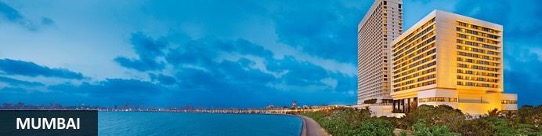
Although it isn’t India’s capital city, Mumbai often feels like it is or perhaps could be. With over twelve million people, it’s certainly India’s most populous city and the larger ‘greater Mumbai’ region homes over twenty million (making it one of the world’s most populous metropolitan regions). It’s long been India’s economic powerhouse – a place to which even the humblest outsiders might arrive, hit the big time through hard work, luck and acumen, and make a fortune. ‘Maximum City’, as it was once called, is sometimes defined by comparisons with Delhi: Delhi is bureaucrats while Mumbai is Bollywood. It’s simplistic but with a grain of truth: the city presents the most commercial, go-ahead, thrusting modern face of India and Bollywood is just one prominent face of its glitz and glamour.
Just a handful of Mumbai neighbourhood names – especially Colaba, Parel and Mahim – reflect its original geography of seven distinct islands. Initially captured by Portuguese trading fleets in the 1500s, they were given to Britain’s King Charles II in 1661 as part of his dowry when he married Catherine Braganza. Soon after that they were leased to the East India Company and quickly became its headquarters so that by the mid-1700s it was a major trading town. By the mid-19th century the islands had merged into one landmass after a series of massive land reclamation projects and seen the launch of India’s first railway line after which it became a major Arabian Sea port.
Today it’s not merely a practical international gateway but a destination showcasing modern India. Marine Drive’s curving Arabian Sea frontage has an almost Mediterranean feel while a clutch of gracefully ageing yet handsome Raj-era buildings stand witness to Mumbai’s significant imperial back-story. Thriving markets and bazaars, Hindu temples, Muslim shrines and a handful of excellent museums can easily fill a day or two’s sightseeing. Often filled with cricket-playing youth, the city’s maidans, or parks, and Dhobi Ghat, the curious open-air laundry, help lend colour, character and vitality to ‘maximum city’.
Overnight: Sun-N-Sand Mumbai
Overnight: Sun-N-Sand Mumbai
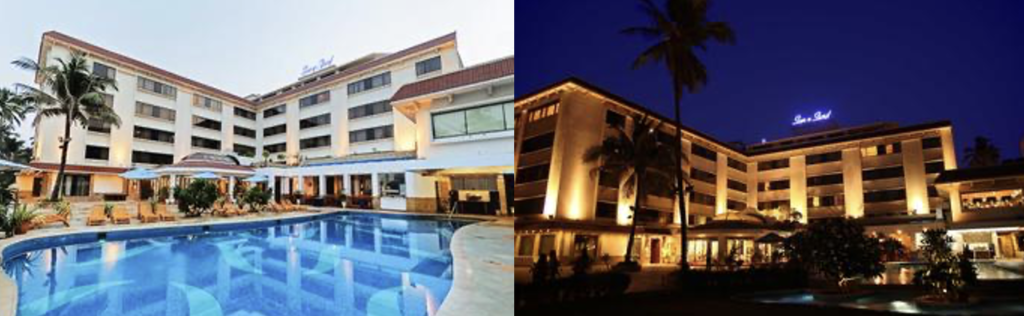
Sun-n-Sand in Mumbai a beachfront hotel, located on the Juhu Beach at a short 20 minute drive from the airport. This establishment is chic and sophisticated in its design with various spacious rooms all containing large flat screen TVs.
Features of note include the pool area, spa and fitness centre. The Beachcomber Cocktail Bar and Lounge serves refreshments and reveals expansive views of the Juhu beach. The Soham Spa allows guests to indulge in spa treatments and massages. The Sun-n-Sand makes an ideal location for travellers wanting a seaside vacation.
Day 2: In Mumbai (Fri, 3 January)
Day Itinerary
After breakfast, proceed for a heritage walk tour of Mumbai including an orientation tour.
Activities
Mumbai City Tour
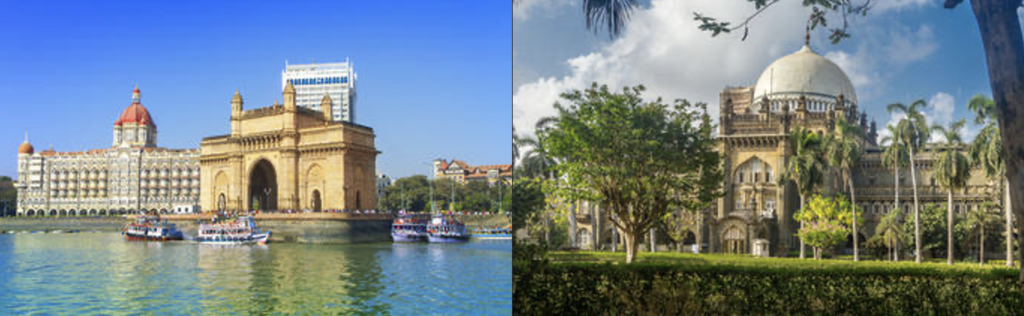
Completed in 1924 to commemorate the landing point of King-Emperor George V, the Indo-Saracenic-style 26metre-tall Gateway of India is probably the city’s most iconic monument. Its seafront location on an open square beside jetties and close to the landmark Taj Mahal Palace hotel – an area almost continuously thronged with families, tourists and roving photographers – makes it feel like the city’s heart. Nearby the Chhatrapati Shivaji Maharaj Vastu Sangrahalay (originally known as the Prince of Wales Museum when it opened in 1922) is among the city’s finest museums dedicated to art, archaeology and natural history. It’s one of several Indo-Saracenic gems, an architectural style drawing on traditional Mughal and Hindu forms that was popularised across India with numerous public Raj-era buildings.
Chhatrapati Shivaji Terminus (formerly Victoria Terminus) is another iconic Mumbai landmark. Completed in 1887, this major railway station – still one of India’s busiest – was built in the Victorian Gothic Revival style yet also blended elements of Indian architecture. In fusing two distinct cultures it effectively forged a new style unique to Mumbai and for good reason it’s now a UNESCO World Heritage Site.
With views of Back Bay, Nariman Point and Chowpatty Beach, Malabar Hill is one of Mumbai’s prime real estate neighbourhoods with some of India’s most expensive properties. Most of the colonial-style bungalows that once peppered its gentle slopes have long been replaced by apartment blocks though a hint of ‘old Malabar’ just about survives at Banganga Tank, a large rectangular water body (still enclosed by high-rise blocks) with mythical associations to the Hindi deity Lord Rama.
A trip down three-kilometre long Marine Drive – sometimes referred to as the ‘Queen’s Necklace’ – framed by numerous art deco-style apartment blocks might end at Dhobi Ghat, an extraordinary open-air laundry space constructed in 1890. It still employs thousands of dhobis, or washermen, with reputedly over 100,000 garments drawn from across the city washed each day.
Day 3: In Mumbai (Sat, 4 January)
Day Itinerary
Breakfast at the hotel.
Rest of the day will be at leisure. Your vehicle will be at your disposal within Mumbai city limits for a mileage 8 hours and 80 Kms. You may go shopping at Mumbai markets.
Ovenight at hotel
Day 4: Mumbai – Nashik (Govardhan) (Sun, 5 January)
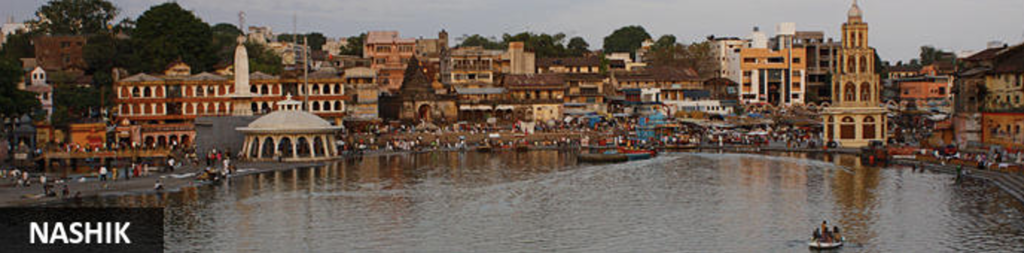
Nashik is one of the most important cities of Northern Maharashtra. The city has become the center of attraction because of its beautiful surroundings and cool and pleasant climate. Nashik has a personality of its own due to its mythological, historical, social and cultural importance. The city, vibrant and active on the industrial, political, social and cultural fronts, has influenced the lives of many a great personalities. The river Godavari flows through the city. Temples and ghats on the banks of Godavari have made Nashik one of the holiest places for Hindus all over the world.
Day Itinerary
After breakfast, you will be driven to Nashik [approx. 5 hours’ drive].
Arrive Nashik and you will be transferred to your hotel
In the evening do the wine tasting tour.
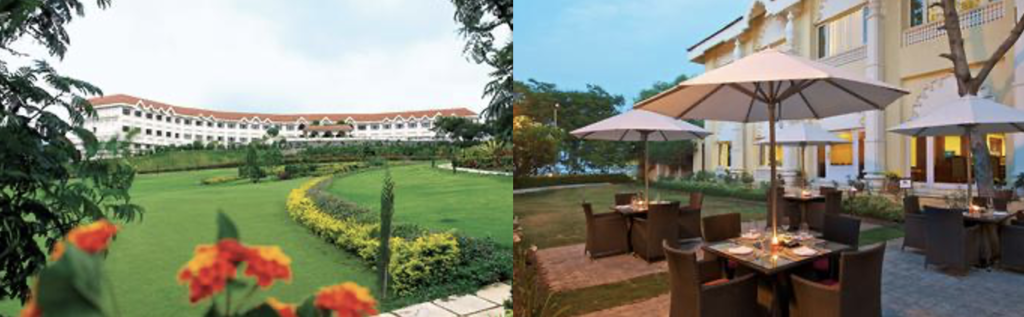
Overnight: The Gateway Hotel Ambad Nashik
The Gateway Hotel Ambad Nashik welcomes guests to comfortable accommodation with photo-worthy views. Surrounded by 11 acres of lush landscaped gardens, religious landmarks and the bustling city life, The Gateway Hotel is the favourable spot from which to explore Nashik.
The stylish, modern rooms and suites have flat-screen TVs, free Wi-Fi, and tea and coffee making facilities. Upgraded rooms have oak floors and marble bathrooms. Suites feature living rooms, with room service available 24 hours.
Amenities include a free breakfast buffet and parking, as well as 2 contemporary restaurants and a bar. There’s also an outdoor pool, a hot tub and a fitness room, sports lawns and courts, meeting rooms for 250 guests, and a 24-hour business centre.
Day 5: Nashik – Aurangabad (Mon, 6 January)
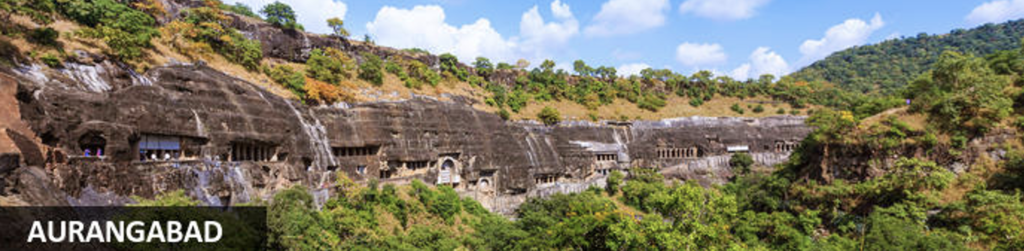
Known for its myriad cultural and historical monuments, Aurangabad is a popular tourist city set on the Kaum River in a hilly upland region of India’s Maharashtra state. The city is best known for the impressive marble Bibi Ka Maqbara, which bears a striking resemblance to the Taj Mahal and was commissioned by the sixth Mughal Emperor Aurangzeb in the late 17th century. Other notable sights include: the Shivaji Maharaj Museum, dedicated to the Maratha king Shivaji; the Aurangabad Caves featuring ancient, rock-cut Buddhist shrines; and the impressive 12th-century medieval Daulatabad Fort. Aurangabad also serves as a gateway to the nearby ancient caves of Ajanta and Ellora.
Day Itinerary
After breakfast, you will be driven to Aurangabad [approx. 4 hours’ drive] enroute stop at Sai Baba Temple.
After the visit proceed to Aurangabad.
On arrival you will check in at the hotel.
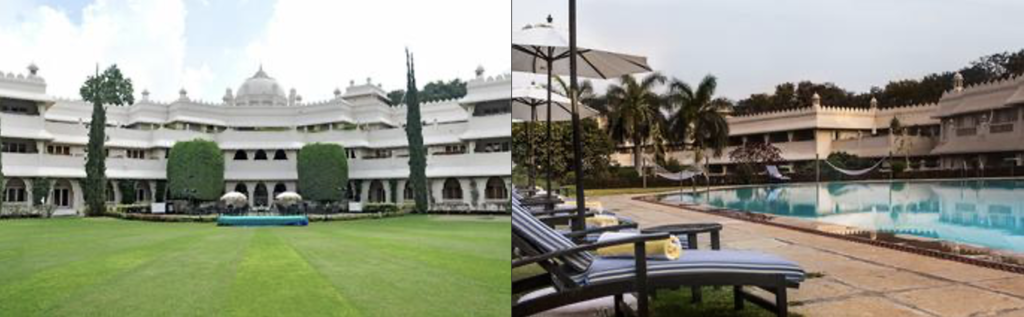
Overnight: Vivanta By Taj Aurangabad
Set amidst acres of landscaped gardens Vivanta by Taj Aurangabad is a gateway to world heritage sites such as the Ajanta and Ellora caves and is conveniently located a few kilometres away from the airport and railway station. All the rooms offer internet access, minibar, television, an electronic safe, direct dial phone, as well as tea and coffee maker. Other amenities include a swimming pool, restaurant, gym, garden and a spa.
Day 6: In Aurangabad (Tue, 7 January)
Day Itinerary
Breakfast at the hotel.
Rest of the day will be at leisure.
Overnight at hotel
Day 7: In Aurangabad (Wed, 8 January)
Today after breakfast, you will proceed for an excursion to Ellora Caves [approx. 1 hours’ drive one way]. The Ellora Caves remain closed on Tuesdays.
Return to the hotel after the excursion.
Activities
Ellora Caves
These 34 monasteries and temples, extending over more than 2 km, were dug side by side in the wall of a high basalt cliff, not far from Aurangabad, in Maharashtra. Ellora, with its uninterrupted sequence of monuments dating from A.D. 600 to 1000, brings the civilization of ancient India to life. Not only is the Ellora complex a unique artistic creation and a technological exploit but, with its sanctuaries devoted to Buddhism, Hinduism and Jainism, it illustrates the spirit of tolerance that was characteristic of ancient India.
Also visit Baby Taj
Bibi Ka Maqbara
Known as the “poor man’s Taj Mahal” or the “mini-Taj”, like the original it is a monument built in memory of love lost. In this case it was a mother’s love, rather than a wife’s, that inspired Prince Azam Shah to build the structure between 1651 and 1661. The mini Taj was erected less than 30 years after the original, composed of slightly more modest building materials, with limestone and plaster as well as marble under the all-marble onion dome. Marble was abundant in northern India, near Jaipur where the Taj Mahal was built. In order to build the Bibi Ka Maqbara, the marble had to hauled on carts to the new capital of the Mughal empire. The construction took only 6 years, compared to the 22 years for the Taj Mahal. The grounds cover 458 x 275 meters of gardens. At the center of the building is the lone tomb of Rabia-ul-Daurani, third wife of the emperor, and mother of the architect.
Overnight at hotel
Day 8: Aurangabad – Pune (Thurs, 9 January)
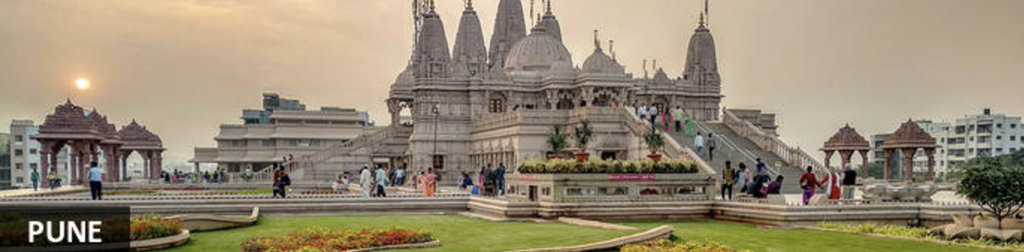
Resting at the convergence of two magnificent rivers, Mula and Mutha, in India’s western Maharashtra state, Pune is a sprawling city known for its educational tourism. Dubbed the ‘Oxford of the East’, this dynamic city features vibrant nightlife, outstanding restaurants, and excellent museums. Pune is considered the cultural capital of the state as it boasts ancient ashrams and forts, modern universities, medieval Maratha history and rich colonial history. Indulge in panoramic views from the nearby twin hill stations of Lonavala and Khandala, visit the historical Sinhagad Fort, or view the grand Aga Khan Palace, a memorial to Mahatma Gandhi. Don’t miss the 8th-century Pataleshwar Cave Temple, which is dedicated to the Hindu god Shiva.
Day Itinerary
After breakfast, you will be driven to Pune [approx. 6 hours’ drive].
Arrive Pune and you will be transferred to your hotel.
Overnight: Hotel Aurora Towers
Day 9: In Pune (Fri, 10 January)
Day Itinerary
Today visit NGO Maher.
Overnight at hotel
Day 10: In Pune (Sat, 11 January)
Day Itinerary
Day at leisure at your hotel.
Overnight at hotel
Day 11: Pune – Goa – Panjim (Sun, 12 January)
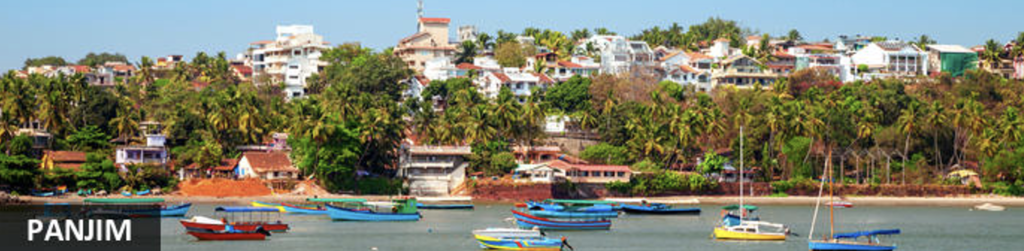
Also known as Panaji, Panjim is the perfect gateway to India’s beautiful beach state, Goa. Portuguese-era colonial charm permeates the colourful buildings and sidewalk cafés. The small city is flanked by the Mandovi River on its northern boundary, offering the perfect opportunity for a sunset boat trip. If you’re keen on a beach escape, head west to Miramar. Sink your toes into the golden Goan sands and immerse yourself in the Arabian Sea. The most popular site here is the Church of Our Lady of the Immaculate Conception, one of the oldest churches in Goa.
Day Itinerary
Breakfast at your hotel.
Later you will be transferred to the airport for your flight to Goa.
Flight SG 525
Departs Pune 1235 Hrs.
Arrives Goa 1345 Hrs.
Arrive Goa and you will have your own arrangements for your transfer to your hotel in Panjim.
Overnight: Panjim Inn
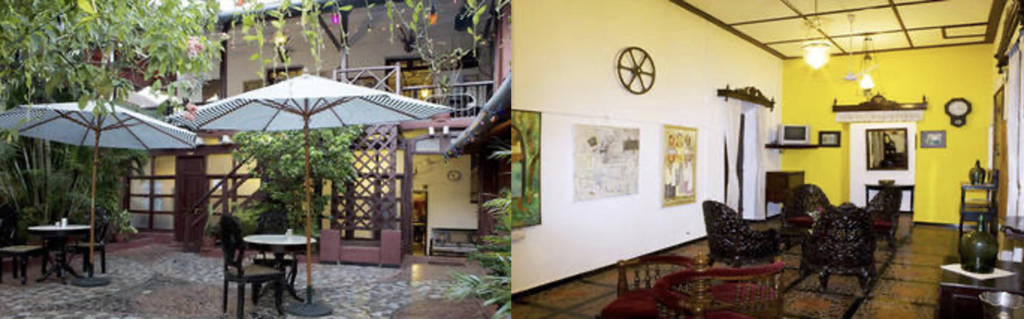
Built in the 1880s, the Panjim Inn was once a family home passed down through 5 generations. The heritage hotel depicts old world elegance and charm with its remnants of a bygone era.
Panjim Inn has 24 air conditioned guest rooms designed with period furniture and embellished with collectibles and antiques. The hotel is equipped with contemporary amenities and features the Veranda Restaurant, which overlooks the hotel surroundings.
Located in a favourable setting to explore Goa, the Panjim Inn is within walking distance of the city centre and several tourist sites
Day 12: In Panjim (Mon, 13 January)
Day Itinerary
Day at leisure in Panjim. No vehicle at disposal.
Overnight at hotel
Day 13: Depart Panjim (Tue, 14 January)
Day Itinerary
After breakfast check out from the hotel and you will have your own further arrangements.
Day 15: Depart Goa (Thu, 16 January)
Day Itinerary
You will have your own transfer arrangements from Goa hotel to the airport.
Flight VS 8803
Departs Goa 2340 Hrs.
Arrives Bangalore 0045 Hrs.
Flight VS 317
Departs Bangalore 0425 Hrs. (on 17 January 2025)
**** END OF SERVICES ****
NOTE:
- The distances and time taken for the travel is approximation only this will differ based on the traffic conditions and other unforeseen circumstances.
Price £3200 per person in economy classic both ways and £3245 per person for this is Economy Delight out and Classic back.
Price Includes
- Total of 12 nights’ accommodation on twin/double sharing basis as mentioned above or similar
- Meal Plan as per mentioned above [BB: Bed & Breakfast]
- Heritage walking tour of Mumbai including an orientation tour.
- Wine tasting tour at Nashik.
- Excursion to Ellora Caves in Aurangabad.
- Visit to NGO Maher in Pune.
- All transfers, sightseeing tours and excursions will be by an air-conditioned Tempo Traveller as per the itinerary (No transportation in Goa)
- Services of English speaking local guides during sightseeing tours as per the itinerary
- Sightseeing and entrances as per itinerary
- Travel Counsellor representative for assistance on all arrival and departure transfers with meet and assist
- A cell phone with local SIM for the length of stay in India
- Mineral water and picnic hamper in the vehicle during long drives
- All currently applicable taxes, including the service tax of 5% applicable on total invoice amount.
Price Excludes
- Expenses of personal nature like tipping, laundry, telephone / fax calls, alcoholic beverages, camera / video camera fees at monuments, medical expenses, airport departure taxes etc.
- Meals other than those specified above
- Transport and guide during days at leisure (unless specified)
- Any transportation in Goa
- Any accommodation for beach stay in Goa
- Any Porterage at Airport
- Any insurance
- Any visa fees
- Any still or video camera charge
- Any air-fare unless mentioned above
- Any other services not mentioned in the inclusion